Model
1 of 3
⌄
✓
Model A
€ 3,298.00
✓
Model B
€ 3,798.00
Electric Blue
✓
Protection Kit
€ 98.00
✓
Storage Pack
€ 78.00
Sold out
Premium Bundle
€ 169.00
✓
Mounting Kit
€ 25.00
UI built by client's team · LD delivers the 3D element only
→ Production example
VanMoof: live integration
VanMoof's team built the right-hand panel entirely against the Web Component API: model selection, accessories, stock availability from their own inventory, and add-to-cart. London Dynamics delivered the 3D asset and the <ld-configurator> element. Everything in the panel is VanMoof's code.
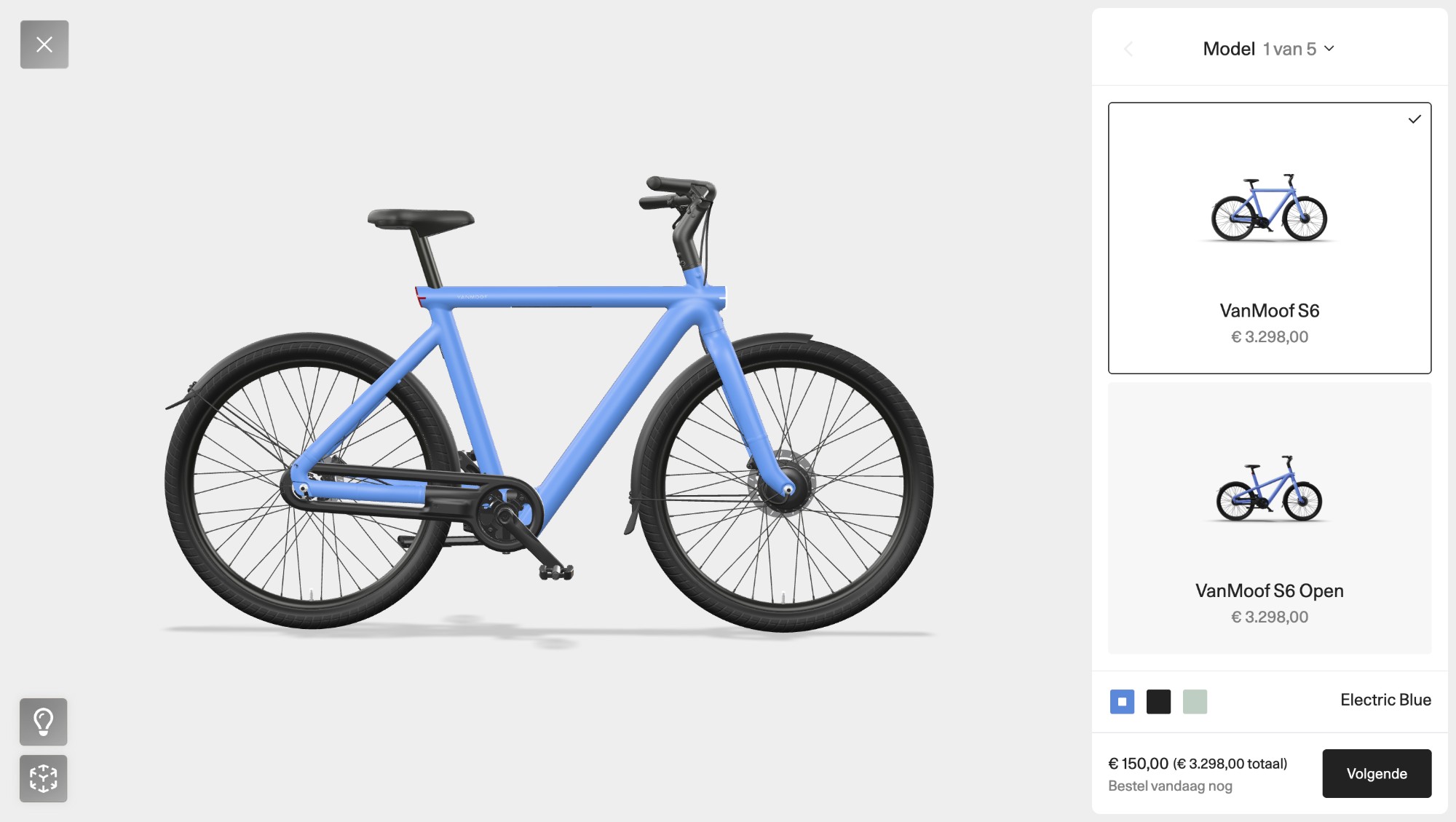
Step 1: Model
Two model cards, colour swatches, live 3D update on selection
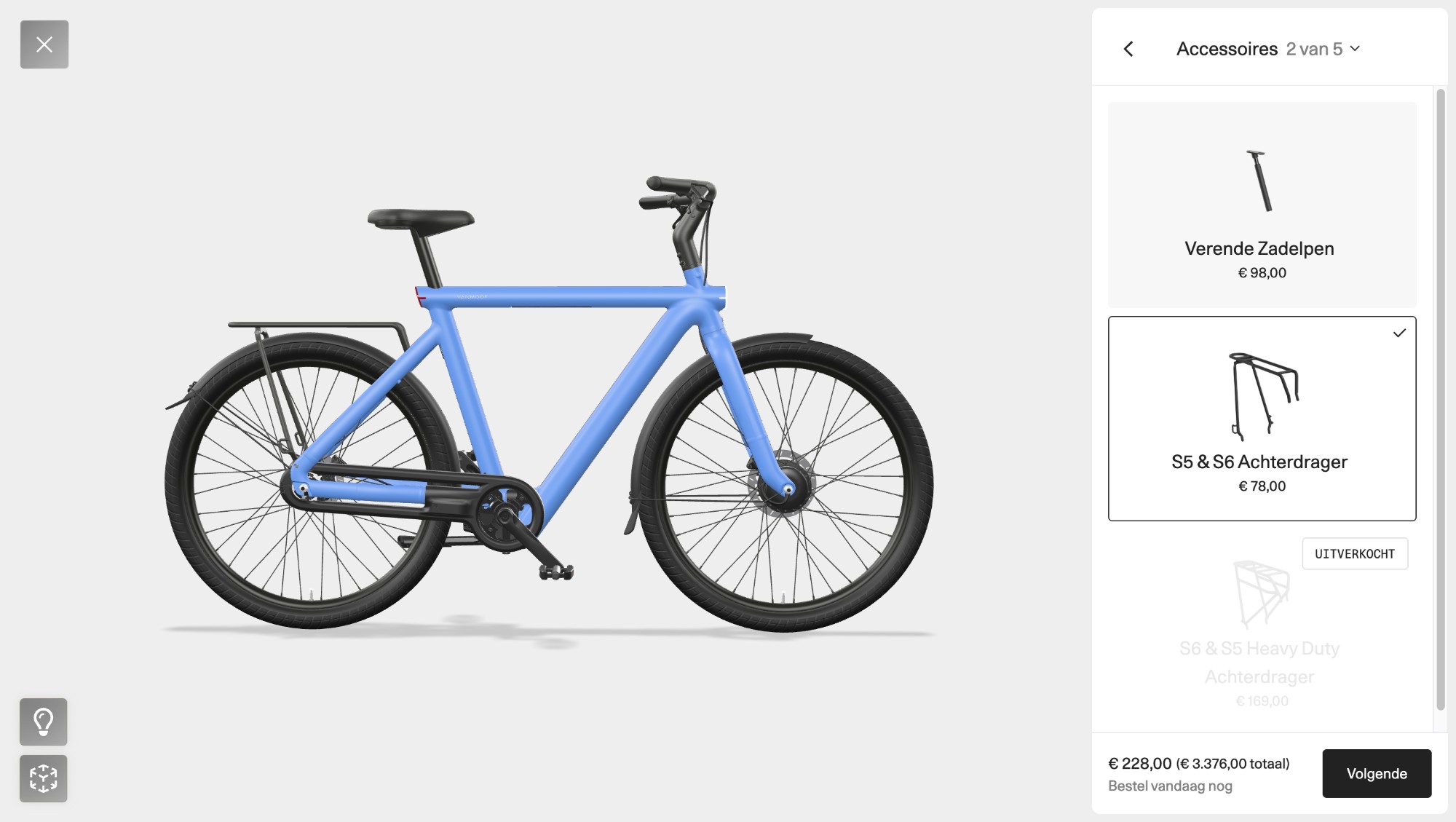
Step 2: Accessories
Stock states pulled from VanMoof's inventory; sold-out items greyed and blocked
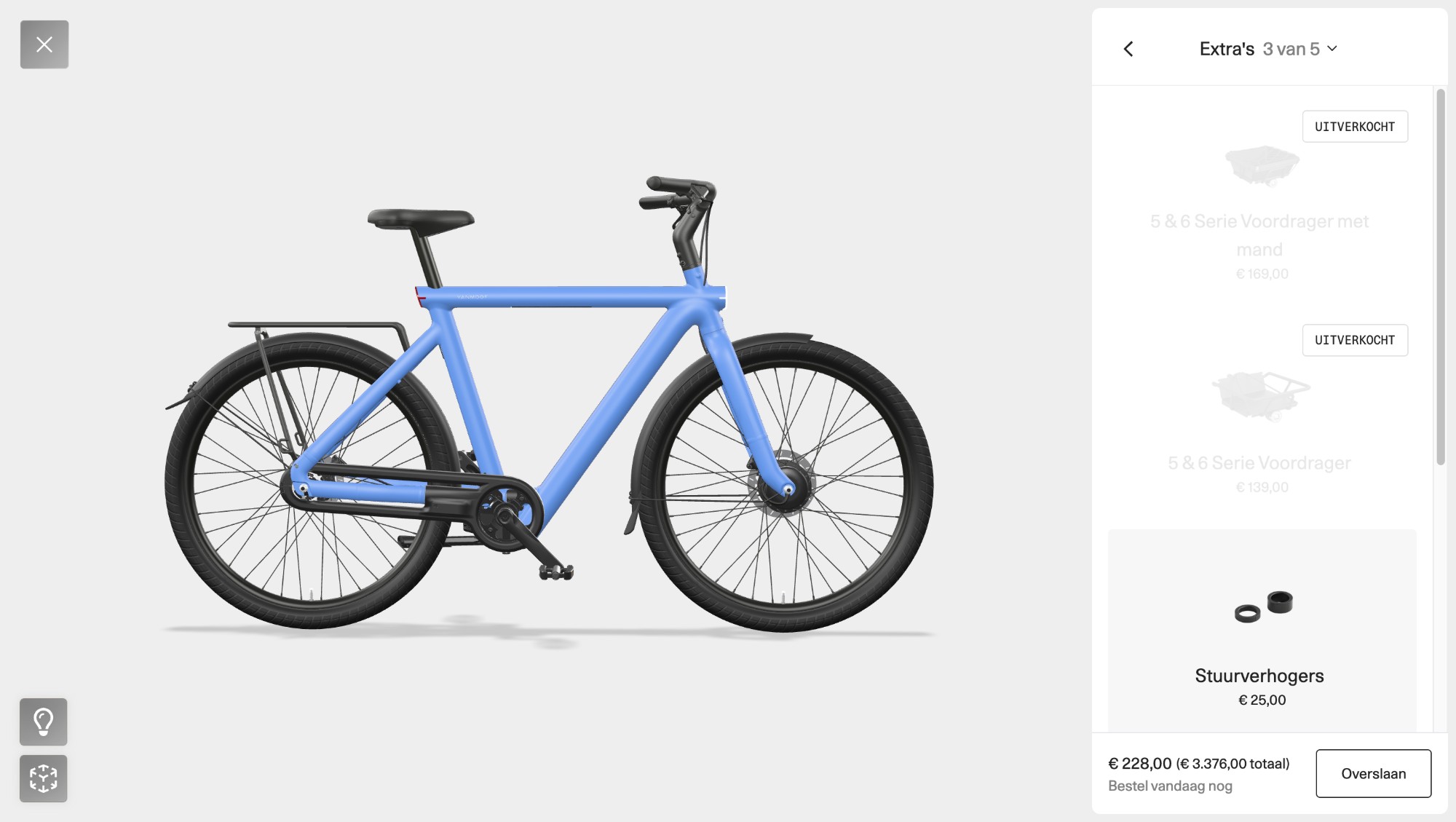
Step 3: Extras
Multiple sold-out items at once; running total and skip option in the footer
What the customer experiences: They move through model selection, accessories, and a summary. The 3D view updates live at every step. Stock states, pricing, and cart logic are driven entirely by the client's own systems, not the LD CMS.
→ When to use this
- The product has complex configuration logic: dependencies, exclusions, conditional options, etc.
- Client wants full control of the UI: their design system, their component library, their interactions
- Accessories or variants have stock states driven by the client's inventory system
- Price needs to update dynamically as options are selected or deselected
- The configurator needs to feed directly into an existing cart or checkout flow
- Product data lives in the client's own system. LD supplies the 3D rendering layer.
→ Project scope
- LD delivers: the 3D scene in the CMS, which includes the feature/variant IDs
- Client builds: the step flow, product cards, pricing display, cart integration, stock state logic, etc.
- An ID alignment session is needed early; our feature and variant IDs must map to their product data model